
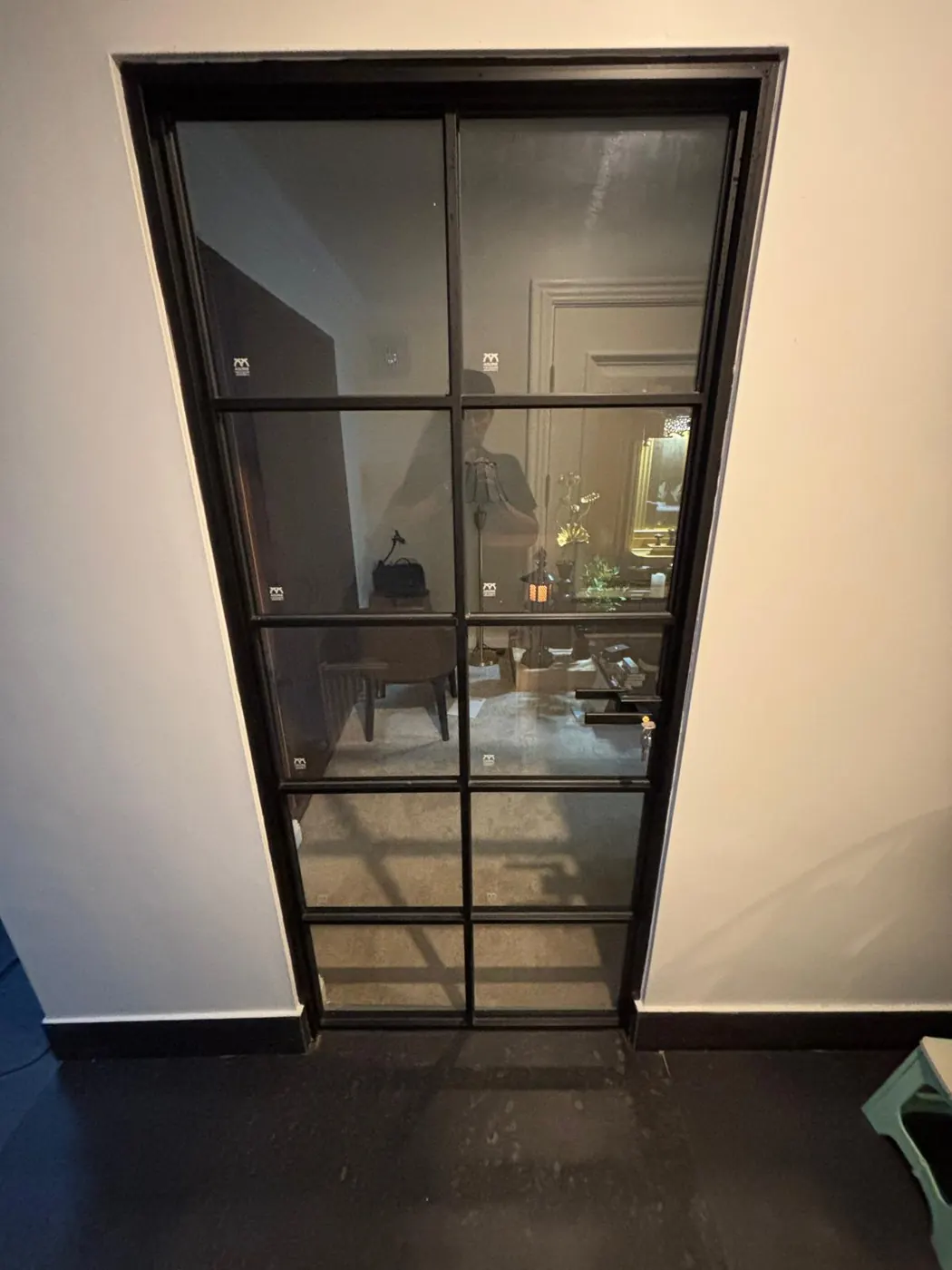
A glass internal door moves daylight from one room into another without taking a wall down. That is why glazed doors have become the most requested style we fit: Irish hallways are often the darkest part of the house, and a glazed door between the hall and a bright kitchen changes it in a day. This page covers the glass options, half glazed and fully glazed doors, the black framed Crittall style look, where each one belongs, and how the doors are measured and fitted. We supply and fit glass internal doors across Dublin, Meath, Kildare and Wicklow.
Which glass suits which room?
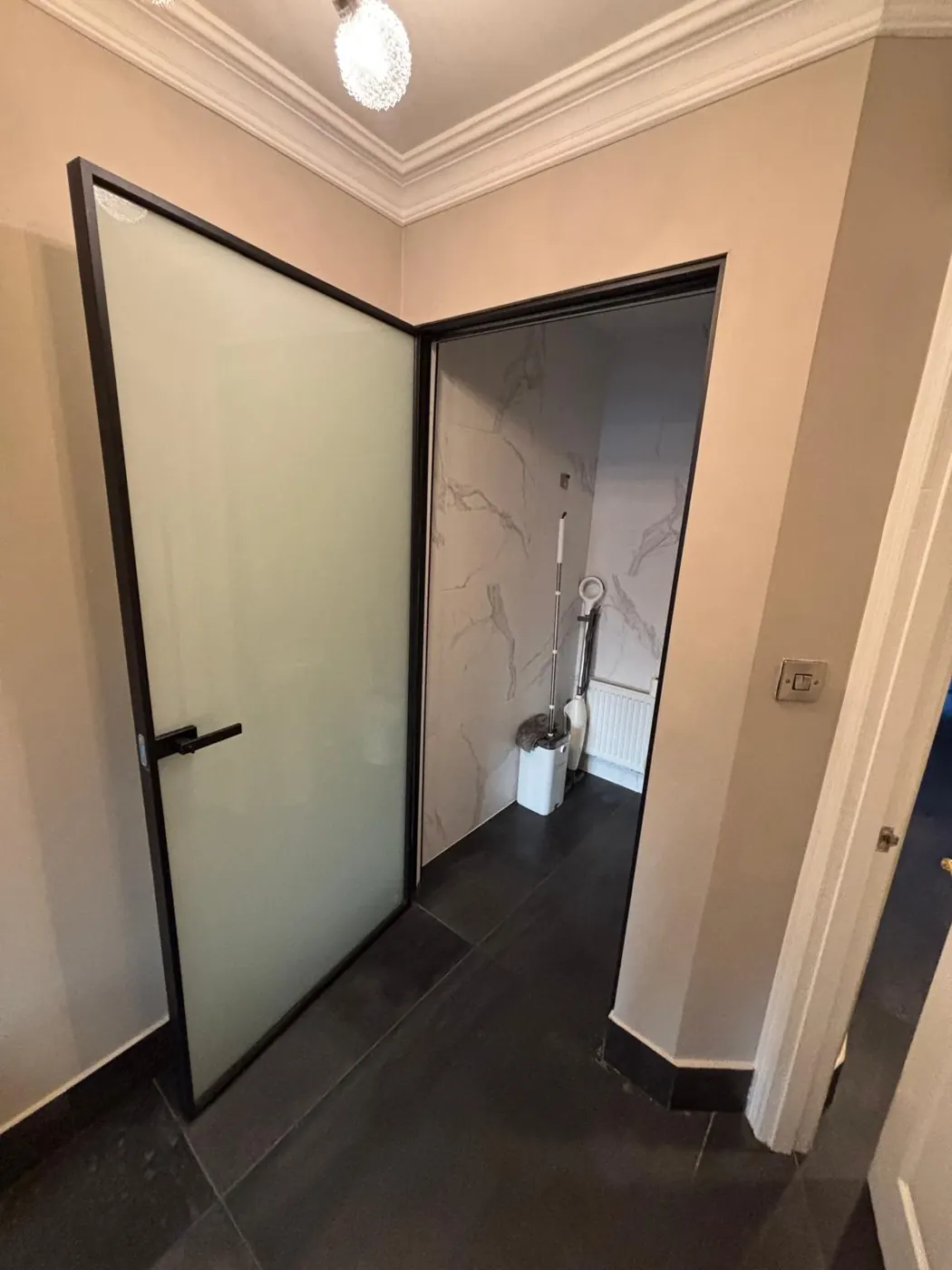
Clear glass shares the view and the most light. Frosted glass gives light without the view. Reeded glass blurs the view, staying bright and decorative.
Choosing a glass internal door is really two decisions: the door, and the glass inside it. The door style sets the look, but the glass decides how the room actually works day to day. Most of the regret we hear about comes from putting clear glass where privacy was needed, or heavy obscure glass where the whole point was light.
| Glass | What you see through it | Where it belongs |
|---|---|---|
| Clear | Everything, both ways | Hall to living room, kitchen to dining, anywhere the two rooms already read as one space and you want maximum light |
| Frosted | Light and shapes, no detail | Home offices, playrooms, downstairs bathrooms, any room that needs to be private but not dark |
| Reeded or fluted | Vertical distortion, bright but broken up | Hall to kitchen where you want character as well as light, and period homes where flat frosted glass looks too modern |
| Clear with astragal bars | Everything, divided into panes | Older houses and any room where a single sheet of glass would look out of place against the joinery |
You do not have to pick one for the whole house. It is common to run clear glass between the hall and the living room and frosted glass on the office door on the same landing, with the same door style and frame colour tying them together.
Are glass internal doors a good idea in an Irish home?
In most Irish homes yes, because the problem they solve is the common one: a dark hall or landing with no window of its own.
A great many Irish houses, particularly semi-detached homes built between the fifties and the nineties, have a hallway with no window at all. The only daylight it gets is whatever leaks around a solid door. Swap that door for a glazed one and the hall borrows light from the room next to it for the whole day, at no running cost.
The same logic applies to north facing rooms, back returns, and any internal room that never quite feels bright. Where a wall would have to come down to fix it properly, a glazed door gets a good part of the benefit for a fraction of the work and none of the structural involvement.
The honest exception is a room you need to be genuinely dark or genuinely quiet. Glass carries more sound than a solid core door, so a room where someone works nights or practises an instrument is better served by a solid door. We will say so on the visit rather than sell you the glazed one.
Why are black framed glazed doors everywhere?
They read as an architectural feature rather than a door, and the dark frame makes both rooms look more finished.
The slim black framed glazed door has become the signature choice in Dublin renovations, and it is not only fashion. The dark frame draws the eye to the opening and gives an otherwise plain wall something deliberate to look at. It also does something useful: a black frame makes the glass read as a window into the next room, so the two spaces feel connected rather than merely joined.
The look borrows from Crittall style steel windows, which have been in Irish and British buildings for about a century, so there is a long reference behind it. If you are worried about it dating, it is worth remembering that a door is a small part of a room to change later, unlike a floor or a kitchen.
What is a Crittall style internal door?
A Crittall style internal door is a glazed door in a slim black frame, often divided by bars, made to look like classic steel windows.
The name comes from Crittall, a British brand of steel windows and doors whose slim, black, gridded glazing has been in Irish and British buildings for about a century. Over time the name has become shorthand for the look rather than the maker, which is why Crittall doors, black Crittall doors and Crittall style doors are all used to describe the same kind of glazed internal door.
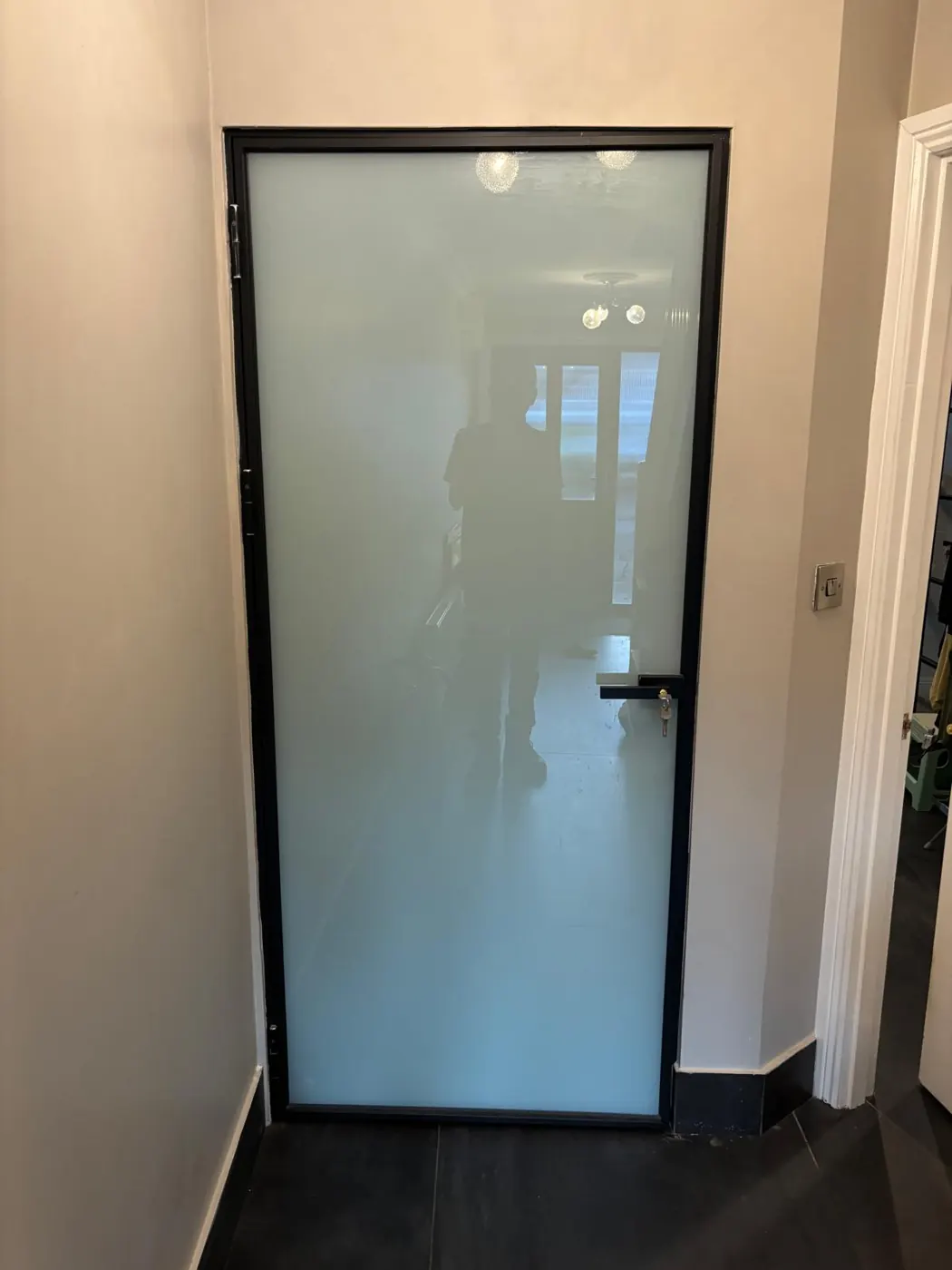
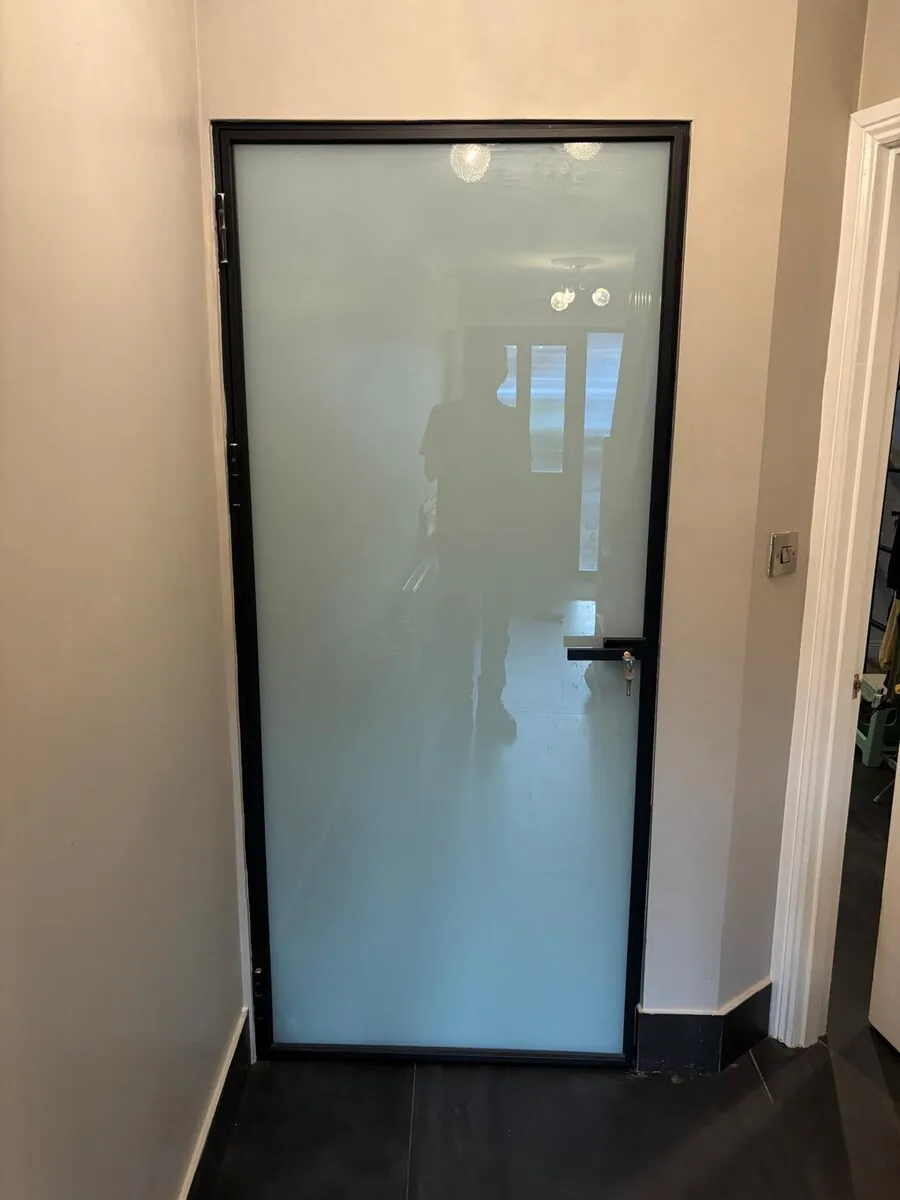
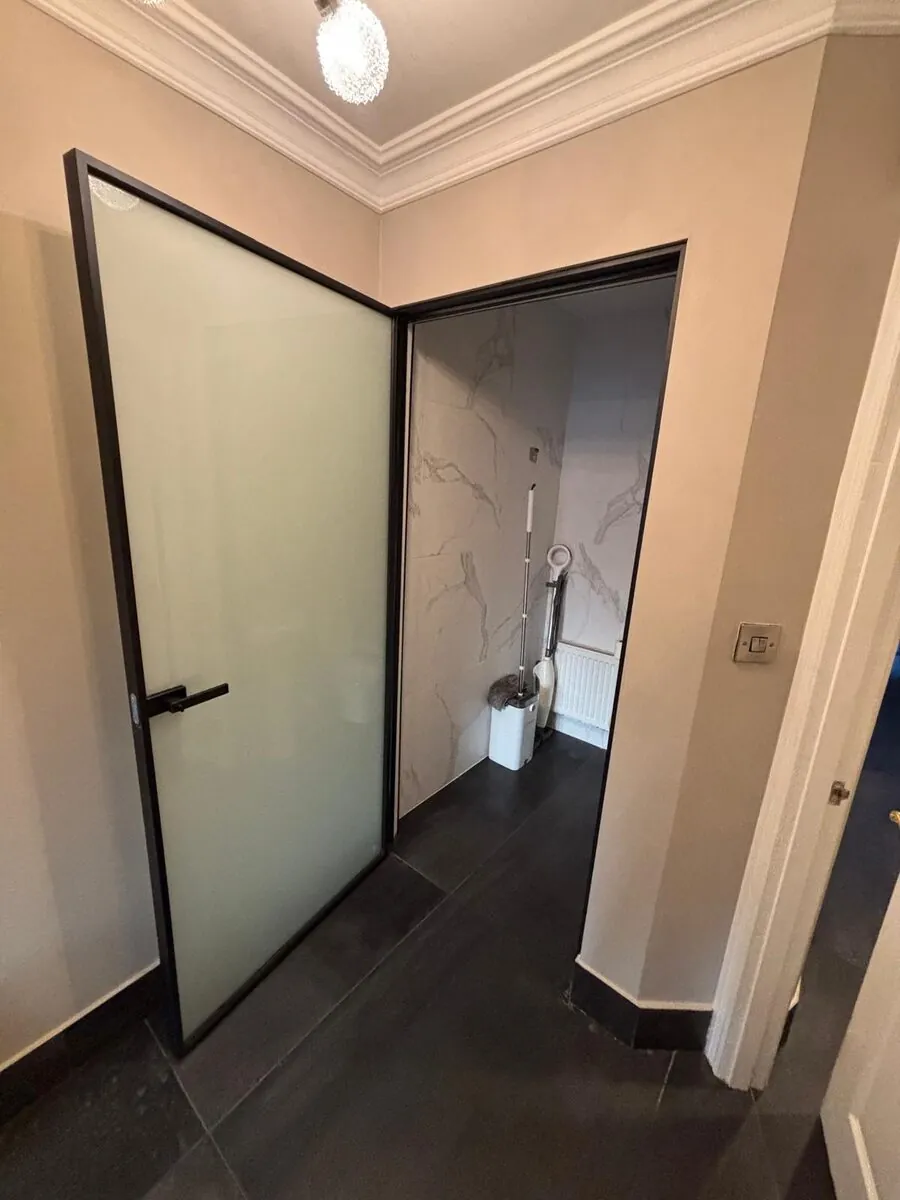
Genuine Crittall products are made in steel. Many internal doors sold as Crittall style are aluminium or timber framed instead, finished in black to give the same narrow sightlines. The style also covers two looks: the gridded version, where thin bars divide the glass into panes, and the pared back version, a single sheet of glass in a narrow black frame like the doors in the photos below.
To be clear, The Home Upgrade Co. is not connected with the Crittall brand and does not supply Crittall branded doors. What we supply and fit are black framed glazed internal doors in the Crittall style, with clear, frosted or reeded glass, measured by Stephen and fitted by our own team across Dublin, Meath, Kildare and Wicklow.
Do glass internal doors give enough privacy?
Frosted and reeded glass pass light while breaking up the view, so a room stays private and still gets the light.
This is the question that stops most people, and it is usually based on picturing clear glass everywhere. In practice the privacy decision is made per door, not per house. Frosted glass reduces what comes through to light and vague shapes, which is enough for a home office, a playroom or a downstairs bathroom. Reeded glass does something similar while looking less clinical, which is why it suits older houses.
Bear in mind that privacy through a door is rarely about seeing and mostly about being seen while doing something ordinary. Frosted or reeded glass solves that completely. If a room genuinely needs to be closed off, a solid door is the right answer, and there is no reason the rest of the house cannot still be glazed.
Half glazed or fully glazed internal doors, which should I choose?
Fully glazed doors give the most light. Half glazed doors give some light with more privacy, and their solid lower half takes everyday knocks.
A fully glazed door, sometimes called a full glass door, is glass from top to bottom inside its frame. A half glazed or part glazed internal door has glass in the upper part and a solid panel below. Both borrow light from the next room; the difference is how much light comes through and how much of the room is on show.
Half glazed doors suit busy family hallways, where the lower half takes the knocks from buggies, bags and dogs, and kitchens where you want light through without a full view of the worktops. Fully glazed doors make most sense between a hall and a living room, or a kitchen and a dining room, where the two rooms already work as one. For a bathroom or toilet, either type needs obscure glass.
| Half or part glazed | Fully glazed | |
|---|---|---|
| Light | Good, from the upper part of the door | The most light a door can pass |
| Privacy | More, as the lower half is solid | Less with clear glass, so choose frosted or reeded where privacy matters |
| Everyday wear | The solid lower half hides scuffs and takes knocks | Glass runs close to the floor, so fingerprints and smudges show more |
| Where it suits | Family hallways, kitchens, utility rooms, cottage and period homes | Hall to living room, kitchen to dining room, dark landings, Crittall style openings |
| Bathrooms | Only with obscure glass | Only with obscure glass |
Glazed doors also come in plenty of patterns. There are doors with one large pane, 3 panel glazed doors with three stacked panes, 15 panel glazed doors with a grid of small panes, cottage style doors with glass in the top section, and stained glass internal doors, which are usually a feature of older houses. Even a door with a window in just the top part can make a real difference to a dark hall.
Frosted, obscure or clear glass: which glass for an internal door?
Use clear glass where you want light and a view, frosted or reeded where you want light with privacy, and obscure glass for bathrooms.
Frosted, obscure and opaque are often used as if they mean the same thing, but it helps to know the difference. Frosted glass has an even, milky finish that lets light through and hides detail. Obscure glass is the wider family of patterned and textured glass made to block the view, and it is the usual choice for a bathroom or toilet door. Opaque is used loosely too, although truly opaque glass lets very little light through, which defeats the point of a glazed door. Clear glass hides nothing and passes the most light.
Reeded glass, with its fine vertical ribs, is a decorative obscure glass and one of the three glazing options we offer alongside clear and frosted. It blurs the view while keeping a room bright, and it suits period houses and modern renovations alike.
Whichever finish you choose, the glass in an internal door has to be safety glass. Ireland's Technical Guidance Document D to the Building Regulations says unguarded glazing in critical locations in doors should be safety glazing, and in practice that means toughened or laminated glass. Toughened glass is heat treated so that if it breaks it falls into small, blunt pieces; laminated glass has a plastic interlayer that holds the pieces together if it cracks.
You may also see double glazed internal doors advertised. The phrase gets used for two different things: a pair of glazed double doors, or a single door with a sealed double glazed unit in place of one pane. Inside a house a single pane of safety glass is the usual choice, so ask which one a quote means before you compare prices.
Can glass doors go into my existing frames?
Usually yes, where the existing frames are sound and square. Where they are not, we replace them, which is common in older homes.
A glazed door hangs in the same opening as the door it replaces, so if your frames are in good condition there is often no joinery work needed beyond hanging and finishing. That keeps the job quick and keeps the quote down.
Older houses move, though. Frames go out of square, they get painted over many times, and a door that fits at the top can bind at the bottom. Stephen checks every frame on the free measure and tells you which openings can keep their frames and which need new ones. Both appear separately on your quote, so you can see the difference rather than take it on trust.
Worth knowing: the common Irish door size is 1981mm by 762mm, but older homes vary in height, width and thickness, which is exactly why every opening gets measured individually rather than counted.
What should you ask about the glass itself?
Ask what glass is in the door and get the answer written on the quote rather than described on the phone.
Glazing is the part of a door quote that is easiest to leave vague, and the part where two quotes most often differ without looking like they do. The thickness, the type and the finish of the glass all change what you get, and none of it is visible in a photo of a finished door.
So ask the question of everyone you get a price from, and ask for the answer on the paperwork. On our quotes the glazing is listed with the door it belongs to, alongside the handles, hinges, any frame work and the removal of the old doors, so there is nothing to discover on fitting day. Every door we supply and fit is covered by our 10-year warranty on doors and windows, and the warranty is written on your quote.
Can you fit glazed double doors between a living room and kitchen?
Yes. Glazed double doors join a living room and kitchen well, sharing light and space while still closing off cooking smells when you need to.
A pair of glazed doors between a living room and kitchen, or a living room and dining room, gives you one bright, open space when the doors are open and two separate rooms when they are closed. It is one of the most useful changes you can make to a house where the kitchen and living room sit side by side but feel cut off from each other.
A pair of doors needs a wider opening than a single door, and room on both sides for the doors to swing. Stephen checks the width of the opening and the space around it on the free measure, so you know before the quote whether glazed double doors will work. Clear glass keeps the two rooms feeling like one; frosted or reeded glass gives the light while hiding the kitchen when you have guests.
If there is not enough room for doors to swing, a sliding or pocket door can close the same gap without taking up floor space. Our pages on French and double internal doors, sliding internal doors and pocket doors explain how each one works, and we can talk through all three on the same visit.
Can I get oak or wooden internal doors with glass?
Yes. Oak and other wooden internal doors are available with glass, from one large panel to several small panes, in clear, frosted or reeded glass.
A wooden door with glass suits a house where a black frame would look too modern, or where the rest of the joinery is timber. Glazed oak doors keep the warmth of the wood and still borrow light for a dark hall, which is why wood and glass internal doors are a common choice in period homes and cottages. Painted timber doors with glass work the same way if you prefer a colour to a natural finish.
Our oak internal doors page covers the oak finishes and glazed oak doors in more detail. Everything on this page about choosing the glass applies to wooden doors too, including the need for safety glass.
How much do glass internal doors cost?
Glazed doors cost more than plain doors of the same style; the gap depends on the glass, the frame and how many openings you have.
We do not publish prices, and we do not quote from a photo or a phone call, because the number depends on things that can only be checked on site: how many doors, which glass, whether the frames are sound, and whether the doors are glazed throughout or only where they earn it. Two houses with the same door count can need very different amounts of work.
What we can tell you is what happens before any money changes hands. Stephen calls out, measures every opening and talks through the glass options in your actual light rather than in a showroom. Within 2 working days you get a 3D design showing the doors in your own rooms and one complete quote covering the doors, the glazing, the hardware, the fitting, any frame work and taking the old doors away. The visit, the measure, the design and the quote cost nothing, and there is no obligation to go ahead.
Everything we supply is premium and made to the highest spec, and it is priced to that standard: semi-solid and solid core doors, new hardware, frames checked and replaced where needed, and a 10-year warranty on doors and windows. Quality at this level is not a budget purchase, and we would rather say so here than at your kitchen table. If you are working to a tight budget, we are honestly not the right fit.
Our full guide to choosing internal doors for an Irish home covers the other styles and door cores if you are still deciding, and our main internal doors page explains how the supply and fit process works across all door types.
How it works
- Free in-home measure. Stephen calls out, measures every opening and goes through the glass and frame options in the light your rooms actually have.
- 3D design and quote within 2 working days. You see the doors in your rooms before you commit, with one complete itemised price for the whole job.
- Fitted within 12 weeks of sign-off. Our own team supplies and fits the doors, glazing, hardware and any frame work, and takes the old doors away.
One team for the doors and the rest of the job
Most people changing their internal doors are doing something else at the same time: a new kitchen, new windows, wardrobes in the bedrooms. Normally that means several contractors, several quotes and several schedules. The same visit that measures your glazed doors can measure for kitchens in Dublin, for windows supplied and fitted, for fitted wardrobes and for media walls and fitted furniture. One design, one quote, one schedule, one number to ring.
If the doors are the only job, that is fine too, as long as the order is at least 5 windows or doors in any mix. Glazed doors are usually quoted as part of a whole-house door order, with glass going only where it earns its place.
Frequently asked questions
Do glass internal doors give enough privacy?
Frosted and reeded glass pass light through while breaking up the view, so a room stays private and still gets the light. Clear glass keeps the view open and suits doors between rooms you already treat as one space.
Can glass internal doors be fitted into existing frames?
Usually yes, where the existing frames are sound and square. Stephen checks each frame on the free measure and tells you which openings can keep their frames and which need new ones, and both appear on the quote.
Are black framed glazed doors a passing trend?
The look draws on Crittall style steel windows that have been in Irish and British homes for a century, so it has a long reference point behind it. A black framed glazed door is also a small part of a room to change later compared with a wall or a floor.
Do you cover Meath, Kildare and Wicklow?
Yes, we supply and fit glass internal doors in Meath, Kildare and Wicklow as well as across Dublin. The free in-home measure and quote works the same way wherever you are in our service area.
Do you fit Crittall style internal doors?
Yes, we supply and fit black framed glazed internal doors in the Crittall style across Dublin, Meath, Kildare and Wicklow. They are not Crittall branded products, but they give the same slim black framed look with clear, frosted or reeded glass.
Does the glass in an internal door have to be safety glass?
Yes, glass in an internal door should be safety glass, which in practice means toughened or laminated glass. Irish building regulations guidance treats glazing in doors as a critical location where safety glazing is needed.
Is there a minimum order for windows and doors?
Yes. The minimum order is 5 windows or doors, in any mix: 5 windows, 5 doors, or 3 doors and 2 windows. We do not quote for one or two on their own, because the freight alone would cost more than the door or window.