
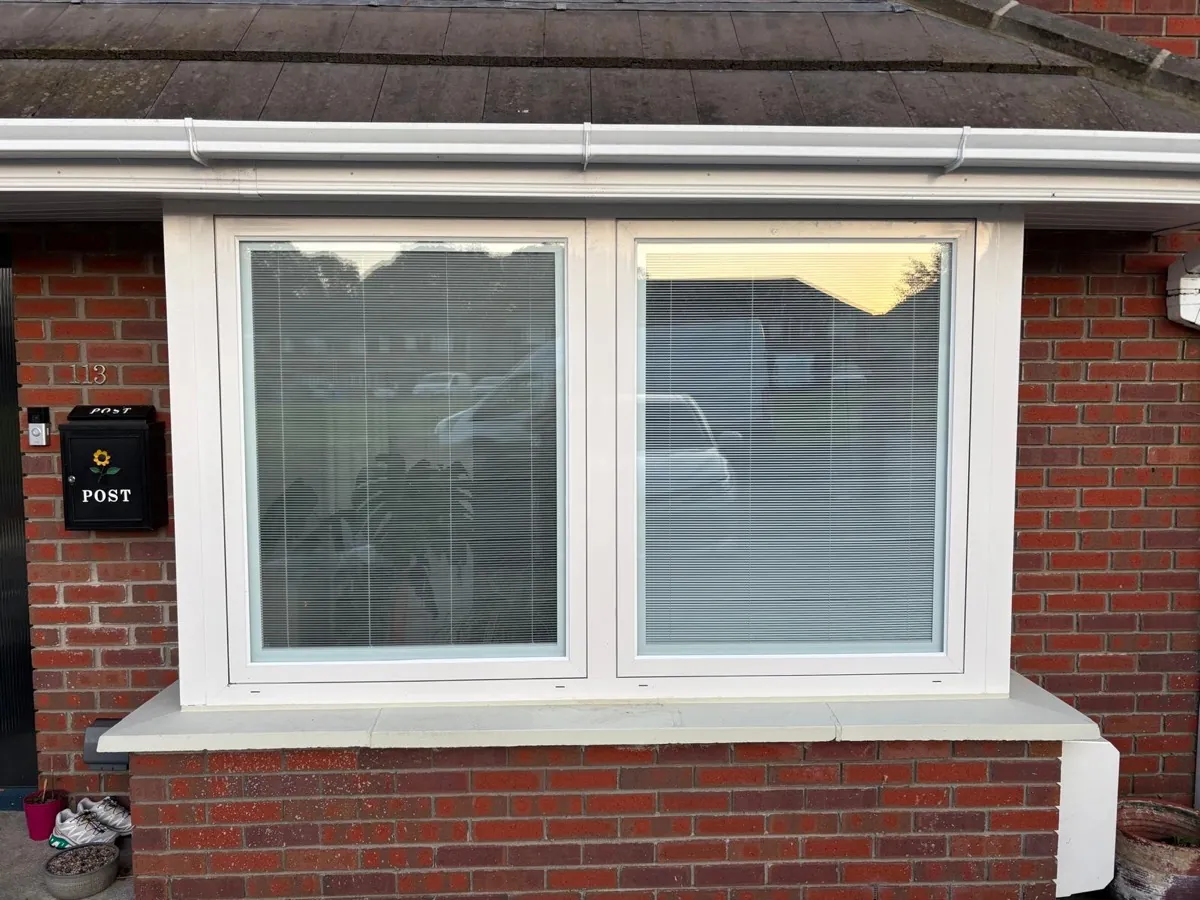

uPVC is what most Irish houses end up with, and usually for sound reasons: it insulates well, it needs almost nothing done to it, and it costs less than the alternatives. The things worth paying attention to are the frame quality, the glazing spec and the fit, because those are what separate a window that lasts from one that does not.
Why do most Irish houses end up with uPVC?
It insulates well, it does not need painting, and it handles a wet climate without complaint.
The Irish climate is hard on external joinery. Timber needs repainting, and untreated steel corrodes near the coast. uPVC does neither. A wipe down is genuinely the maintenance.
It also performs well thermally, because the frame itself is a poor conductor of heat. That is a real advantage over aluminium unless the aluminium frame is thermally broken.
Casement or tilt and turn?
Casement windows hinge at the side and open outward. Tilt and turn tilt inward at the top for ventilation, or swing fully inward for cleaning.
Casement is the traditional Irish pattern and what most houses already have. It is simple, well understood, and there is less hardware to go wrong.
Tilt and turn is worth considering upstairs, because the full inward swing lets you clean the outside of the glass from inside the room. It also gives you secure background ventilation on the tilt setting with the window still latched.
What glazing should you specify?
High performance double glazing is the standard specification and suits most homes. Triple glazing is worth considering on exposed elevations and where noise is the main concern.
The gain from triple glazing over good double glazing is smaller than people expect in a typical Irish house, and the units are heavier, which puts more load on the hinges and frame. It earns its place on a very exposed gable, on a road facing elevation, or in a deep retrofit where the whole envelope is being improved.
We do not publish performance figures on this page, because the numbers depend on the exact unit specified and we will not quote figures we have not verified against a manufacturer spec sheet. What we will do is put the specification in writing with your quote.
What does a proper window fit involve?
Removing the old window without wrecking the reveal, setting the new frame square, fixing it properly, and sealing and making good inside and out.
Most window complaints are fitting complaints rather than product complaints. Draughts at the reveal, cracked plaster inside, and sealant that fails in a year are all install issues. The frame has to sit square in an opening that usually is not, be packed and fixed correctly, and be sealed with the right materials on both faces.
Making good is part of the job, not an extra. Internal reveals are left ready for decoration and external seals are finished properly.
Windows carry a ten year warranty against defects.
How it works
We call out, measure the space and talk through what you want. Our designers draw it in 3D so you see the finished piece in your own room, and you get one complete itemised quote within two working days. Nothing is ordered and nothing is charged until you say yes.
One team for this and the rest of the job
The same team that makes this fits it, and we also do kitchens, fitted wardrobes, internal doors and windows. If more than one thing needs doing, it is one contractor, one schedule and one point of contact rather than four. See the rest of our work.
Frequently asked questions
How long does a window replacement take?
Most houses are done in a small number of days depending on how many windows there are. You get the sequence in writing with your quote before anything starts.
Do you replace windows one room at a time?
Yes, where that suits you better. Each opening is closed the same day it is opened, so the house is never left open overnight.
Can you match the style of my existing windows?
Yes. Frame colour, opening pattern and glazing bars can all be specified to match what is there, which matters most on a house where only some windows are being replaced.
What areas do you cover?
Dublin, Meath, Kildare and Wicklow. The design visit is free and there is no obligation.