
If you have bought, or are buying, a house that has been empty for two years or more, the vacant property refurbishment grant can pay for a large part of bringing it back to life. This guide sets out what the grant pays, which works it covers and the limit on each, and how the windows and kitchen fit into your application. The figures come from the Department of Housing's scheme outline (August 2026) and the gov.ie grant page as updated on 22 October 2026. Rules change, so check both before you apply.
How much is the vacant property refurbishment grant?
Up to €50,000 for a vacant house, or €70,000 if it is derelict. Both include VAT and are capped for each type of work.
The gov.ie grant page sets the standard grant at up to €50,000. If the house is structurally unsound and dangerous, or on the Derelict Sites Register, a top-up of up to €20,000 brings the total to €70,000. Properties on the offshore islands get up to 20% more, which means €60,000 vacant or €84,000 derelict.
These are maximums, not payments. The scheme outline says the grant is subject to upper limits for each type of work and to a reasonable cost assessment by your local authority, and that it is inclusive of VAT. Converting a former shop or public building into two or more homes raises the ceiling to between €70,000 and €110,000.
What does the vacant property grant pay for?
Ten categories of work, from strip out and structure to services, windows, internal finishes and the kitchen. Several categories have their own euro limit.
This is the works table from the Department's scheme outline for refurbishing a single home. The limits are based on a typical two storey, three bed semi-detached house, and the outline says costs will differ with the type, size and condition of the building. The two rows we supply are highlighted.
| Works category | Limit (incl. VAT) |
|---|---|
| 1. Demolitions, strip out and site clearance, including hazardous materials | Overall grant cap |
| 2. Substructure: foundations, slabs, damp proofing, underpinning | Overall grant cap |
| 3. Superstructure: walls, chimneys, upper floors, stairs, roof structure | Overall grant cap |
| 4. External completions and finishes, in total | €42,700 |
| 4a. External doors, windows, cills and railings | €21,000 |
| 4b to 4e. Fascias and gutters, roof lights, external painting, roof finishes | €21,700 between them |
| 5. Internal completions and finishes, in total | €26,300 |
| 5a. Internal doors, frames, architraves and ironmongery | €7,000 |
| 5b to 5e. Skirtings, wet area tiling, painting, floor finishes | €19,300 between them |
| 6. Services: plumbing, heating, ventilation, power, lighting, smoke detection | Overall grant cap |
| 7. Fittings, in total | €10,500 |
| 7a. Kitchen units | €7,700 |
| 7b. Sanitary ware and bathroom fittings | €2,800 |
| 8. External works within the site | €7,000 |
| 9. An extension, as part of a wider refurbishment | Overall grant cap |
| 10. Professional fees and surveys | 10% + VAT of the net build cost, or €14,000, whichever is less |
On the islands, every category limit is 20% higher. A new stand alone boiler running on fossil fuel is not funded.
Demolition and extensions can only be part of a wider refurbishment of the existing house. If planning permission turns the job into a demolish and rebuild, the outline treats it as a new build, and new builds cannot get the grant.
How much of the grant can go on new windows and doors?
Up to €21,000, under category 4a, which covers external doors, windows, cills and railings for a typical three bed semi-detached house.
Category 4a in the scheme outline is the line for windows and external doors, and the application form asks you to enter the quoted cost against it. The €21,000 is a ceiling. The council pays what it judges a reasonable cost for the work, up to that limit.
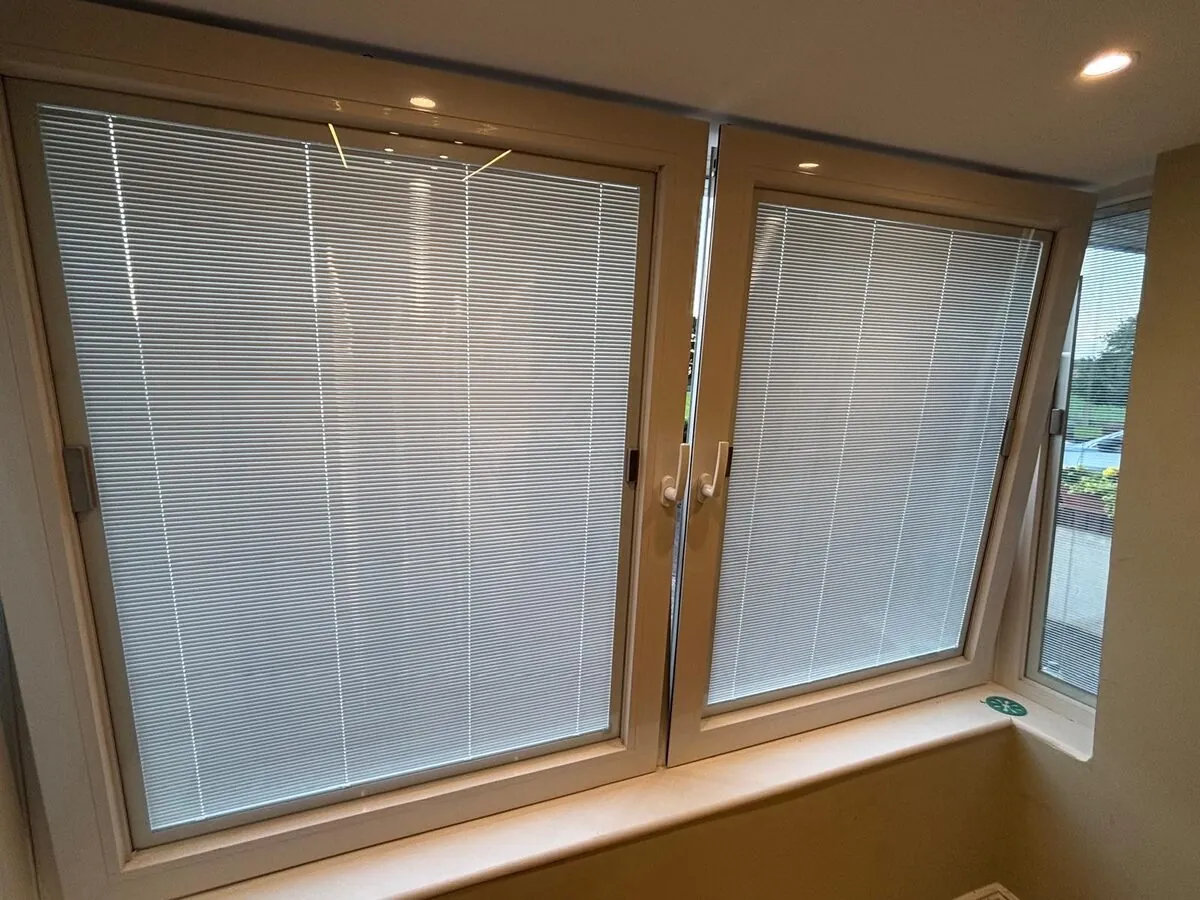
Windows in a house that has stood empty for years are often rotten, single glazed or past saving, so most grant jobs replace every opening at once. That suits our minimum order of 5 windows or doors, and pricing every opening on one quote shows you how much of the €21,000 the windows will use. Ours are premium windows, supplied and fitted, in uPVC, aluminium or timber, with a 10 year warranty.
The same windows cannot be paid for twice. The outline says councils will check that grant approved works have not been funded by any other scheme, and the form asks for every other grant applied for on the building. If you were also planning on the SEAI windows and doors grant, ask your council how the two fit together before you apply for either.
Does the vacant property grant cover a new kitchen?
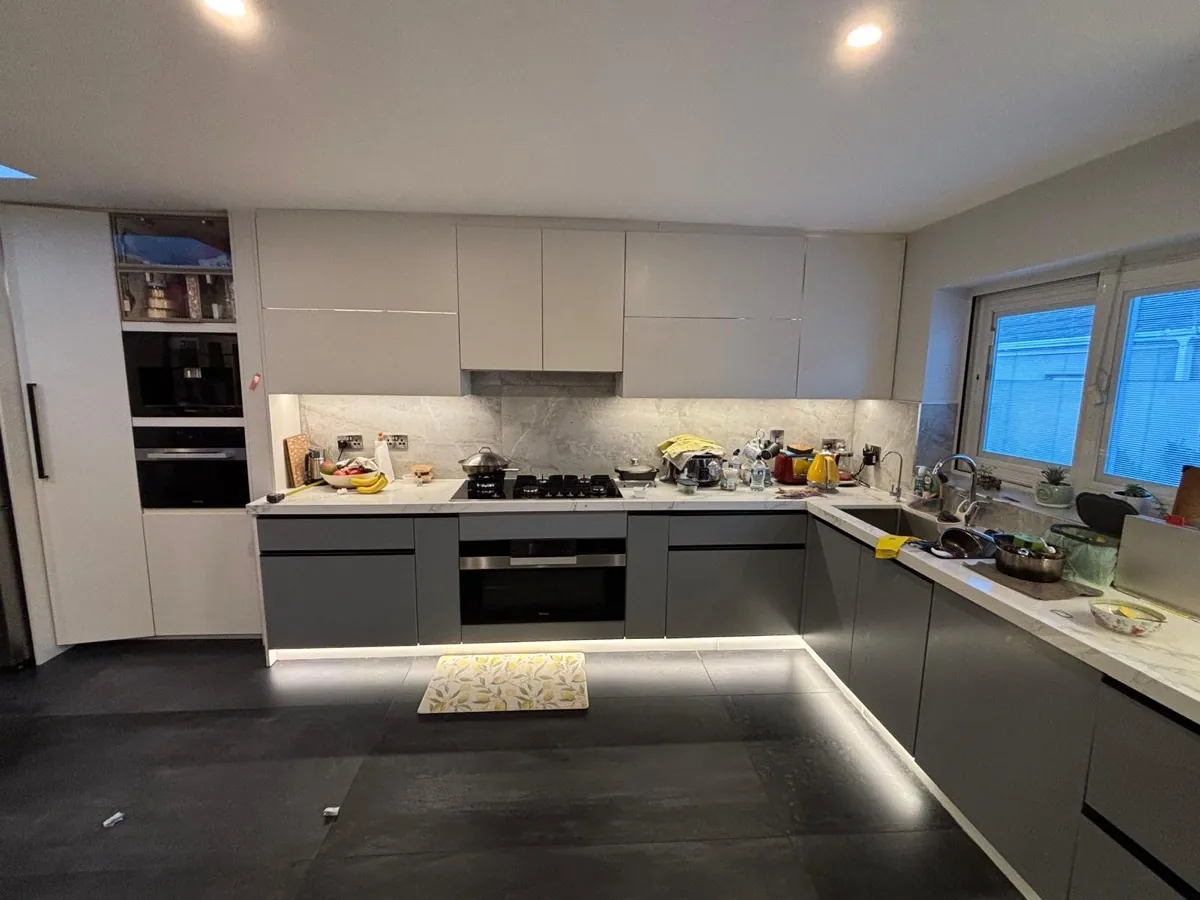
Yes. Kitchen units can be funded up to €7,700, under category 7a. Anything over that comes out of your own pocket.
Category 7 in the scheme outline covers fittings, up to €10,500 in total, with €7,700 of that for kitchen units and €2,800 for bathroom fittings. The plumbing, electrics, tiling and flooring around a kitchen fall under other categories (services, wet area tiling and floor finishes), with their own limits.
Our kitchens start from €12,000 fitted, including VAT, so on most jobs the grant covers part of the kitchen rather than all of it. The application form asks outright whether you can pay any extra cost the grant does not cover, so it is worth knowing that figure before you apply. The kitchen price includes design, supply, fitting and taking out the old kitchen. It does not include plumbing, electrics, gas, tiling, flooring or appliances, which your builder or trades would do.
Everything we supply is premium and made to the highest spec, and it is priced to that standard. Quality at this level is not a budget purchase, and we would rather say so here than after you have filled in the form. If the grant is the whole budget for the kitchen, we are honestly not the right fit.
Need windows and a kitchen priced for your application?
Send photos, a short video and rough sizes of the house. We price every window and the kitchen separately, so the figures drop straight into categories 4a and 7a on the form.
Are internal doors covered by the grant?
Yes. Internal doors, frames, architraves and ironmongery can be funded up to €7,000, under category 5a.
Category 5a sits inside internal completions and finishes, which is capped at €26,300 in total in the scheme outline. Internal doors can be added when they go in with the windows or the kitchen on the same order, priced with the rest of the job.
Can I use the grant for fitted wardrobes or a media wall?
Neither is named in the works table, so do not count on grant money for them. Ask your local authority before you include them.
The works table names kitchen units and bathroom fittings under fittings, and does not mention wardrobes, built in storage or media walls. Your local authority decides what it will approve, so if you want them in the application, ask the council first.
Many people still do them in the same order as the kitchen, because one design and one fitting crew for the whole house is simpler than three separate jobs. Fitted wardrobes and media walls are made to measure, drawn in 3D with the kitchen, and carry a 2 year warranty, like all our wood products.
How do you apply for the vacant property refurbishment grant?
Apply to the local authority where the house is, with proof of vacancy, ownership and age, and a quotation for each works category.
The gov.ie page and the Citizens Information guide set out who qualifies. The order below follows the scheme outline:
- Check the house qualifies: built before 2008, vacant for at least two years, and owned by you or being bought by you. Companies cannot apply.
- Get quotations for the works, with a cost for each works category you are applying under.
- Apply to your local authority on the single dwelling form, with proof of vacancy, ownership, the build date, Local Property Tax and the quotations. A derelict top-up also needs an engineer's, architect's or building surveyor's report, or the Derelict Sites Register entry.
- The council inspects the property and decides what works to approve. You get an approval letter.
- Do the approved works within 18 months.
- Send the invoices. After a final inspection, the council pays the grant.
The grant is paid at the end, not the start, so you pay for the works first and are reimbursed. If you are renting the house out, it is paid once the tenancy is registered with the RTB.
What does the council need to see on your quote?
A cost for each works category you are applying under, including VAT. Before payment, detailed invoices and your contractors' tax clearance.
The application form says quotations must give the individual costs for each works category in the table. A single lump sum for "kitchen and windows" makes the council's job harder, so ask every contractor to split their quote by category. Our quote prices each window and door, and puts windows and external doors under 4a and the kitchen units under 7a, all including VAT.
At the payment stage the council wants detailed invoices for the work done. Under the scheme outline it also wants your tax clearance and that of every contractor who did construction work worth more than €650 on the property. Revenue explains tax clearance for grants. Get each contractor's certificate just before you pay them, because a missing one can stop the grant being paid.
On our grant jobs, the quotation and the invoices come from BIRUDA, the manufacturer that makes our windows and kitchens. BIRUDA holds Irish tax clearance and gives you its certificate for the council, so that part of the paperwork is covered for the windows and the kitchen. Your builder and any other trades need to give you their own.
When should I order windows and a kitchen on a grant job?
After the approval letter arrives. Our windows and kitchens take about 12 weeks from signing off the design to fitted, well inside the 18 months.
The scheme outline says works must be approved in advance, after the council inspects the property, so do not order or start anything before the letter. Get quotes and your 3D design done while you wait for the decision, then sign off once you are approved.
Windows normally go in once the structure and roof are sound and the openings are ready. The kitchen goes in after plastering, first fix plumbing and electrics, and before the floor is finished around it. How long a new kitchen takes explains each stage.
Who does the rest of the refurbishment?
Your builder. We do the fit out: windows, kitchens, wardrobes and fitted furniture. Structure, roofing, plumbing, electrics and heating are for builders and trades.
Categories 1, 2, 3, 6 and 9 in the works table are building work, and that is where most of a derelict house's budget goes. We come in after the structure is done, for the windows, the kitchen and any made to measure joinery, and we work to your builder's programme. For a sense of what the different parts cost, the cost guides cover windows, kitchens and fitted furniture.
Questions people ask about the vacant property grant
Can I apply for the vacant property grant before I own the house?
Yes. The council can give approval in principle if you show you are actively negotiating to buy, and it becomes full approval once ownership transfers to you.
Can I start the work before the grant is approved?
No. The works must be approved in advance, after the council inspects the property, and the grant is paid when the approved works are finished and inspected.
Do I have to live in the house to get the grant?
You must either live in it as your main home or rent it out with the tenancy registered with the RTB. Short term letting is not allowed, and selling within 10 years means paying back some or all of the grant.
Is there a minimum order for windows and doors?
Yes, 5 windows or doors in any mix. A whole vacant house almost always needs more than that, so it is rarely an issue on a grant job.